About
Making future-ready learning accessible, practical and responsible.
AI, Futures Literacy and Human-Centred Leadership for the Global South.
Our story
Fiker Futures Academy began with a straightforward observation: technology and strategy conversations were moving quickly, while practical, honest education about them was not keeping pace — particularly outside a small number of well-resourced institutions.
The academy was founded to close that gap. It teaches artificial intelligence, strategic foresight and human-centred leadership in plain language, with live practice, real use cases and an emphasis on responsible application.
Work is delivered to individual learners, students, schools, universities, corporations, NGOs and public-sector organisations, both online and in person.
Mission and approach
Mission. To help people and institutions build the literacy, judgement and confidence needed to make good decisions in a fast-changing environment.
Approach. Concepts are taught clearly, demonstrated live, practised with guidance, and connected to the participant's own context. Ethics and human oversight are treated as part of competence, not as an afterthought.
Claims are kept measured. The academy describes what it teaches and how, without inflated statistics or accreditation it does not hold.
Values
What guides the work
Accessible education
Learning that is understandable, affordable where possible, and open to people outside traditional pathways.
Practical application
Every concept is tied to something a participant can use in their work or study.
Human-centred technology
Technology serves people, judgement and purpose — not the other way round.
Ethical foundations
Responsible use, honest disclosure and human oversight are taught from the first session.
Critical and futures thinking
Questioning assumptions and considering alternative futures before committing to action.
Community and collaboration
Learning continues through peers, mentors and shared practice.
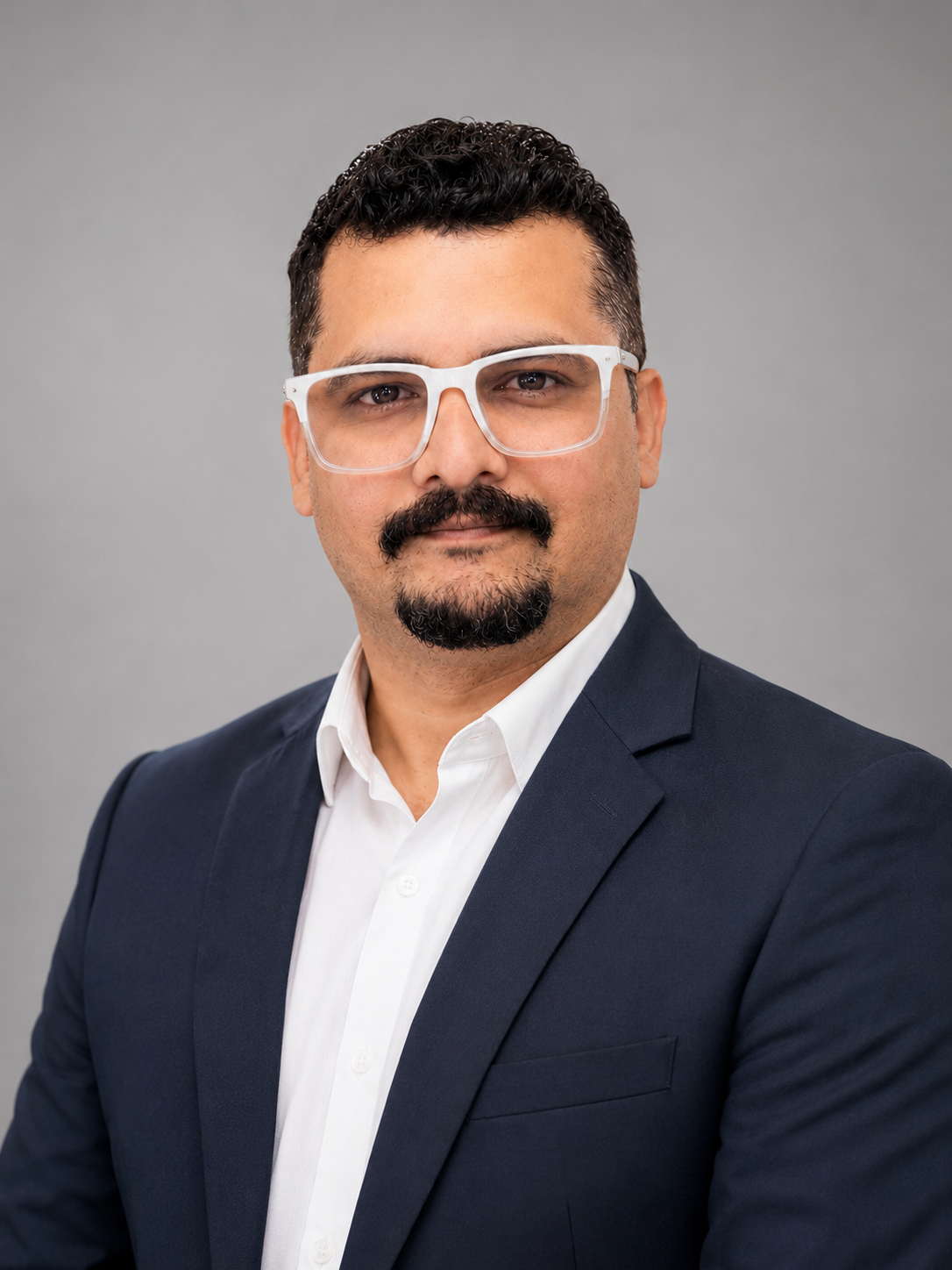
Founder & Lead Educator
Professor Dr. Salman Ahmed Khatani
Associate Professor and Cluster Head (HRM & Social Sciences) at Iqra University, Karachi, with 15+ years across university teaching, research supervision and academic leadership. Recognised as a Global Futurist by the Dubai Future Foundation, Chair of the Next Generation Foresight Practitioners (NGFP) Steering Committee and author of AI Designing Tomorrow. His work bridges strategic foresight, AI literacy, management, entrepreneurship and human-centred leadership, with a focus on preparing people and institutions in the Global South for accelerating change.
Read the full profile of Dr. Salman Khatani
Academic and professional background
- Ph.D. in Public Administration, University of Karachi (2023); M.Phil. (2018); MPA Finance (2012)
- Associate Professor & Cluster Head, HRM and Social Sciences, Iqra University, Karachi
- Former Futurist and Manager, IMAGINE: Institute of Futures Studies, Iqra University
- University of Cambridge — DemEd Global Programme, six Key Essentials courses (2025–2026)
- 38 master's theses supervised; 3 PhD candidates co-supervised
- 15+ peer-reviewed journal publications in management, foresight and sustainability
Selected engagements
Corporate, government and institutional training
AI Literacy, Futures Literacy and strategic foresight training for Gadoon Textile Mills, Lucky Energy, DHA Education Branch, Aga Khan School, Sindh Police, Halar Memon General Jamat, NJV School, Laureate Foundation and Pakistan Police FM 88.6.
Dubai Future Forum, 2022 and 2023
Fully funded engagements as a Global Futurist recognised by the Dubai Future Foundation.
Workshop on Revolutionizing Skill Development, ZHAW Switzerland, 2024
Pedagogies for sustainability and the role of AI in training for decent work and climate resilience.
Mentor, OPEN English Language Program Challenge, U.S. Embassy Islamabad, 2025
Mentored a teacher team that placed first across Pakistan; recognised by the U.S. Consul General in Karachi.
Workshop on Pedagogical Safety and Future Classrooms, 2025
Including the session “Imagining the Future Classroom: Collaborative, Inclusive and Safe Learning Spaces in 2044.”
International Focus Group: Impact of AI on Higher Education in Pakistan, 2025
Cross-institutional dialogue with Iqra University, KSBL, Al Ghazali University and Universiti Teknologi PETRONAS, Malaysia.
Recognitions and appointments
Global Futurist, Dubai Future Foundation
Two fully funded Dubai Future Forum engagements, 2022 and 2023.
Chair, NGFP Steering Committee (2026)
Next Generation Foresight Practitioners, associated with the School of International Futures (SOIF), UK; Steering Committee member since 2025, with Chair appointment announced in September 2026.
Advisory Board Member, Lifeboat Foundation
Business, Education, Futurists and Sustainability boards, 2025–present.
Author — AI Designing Tomorrow (2026)
A Guide to Futures Literacy, AI Wisdom, and Purposeful Living. Kitaab Nagar, Karachi. ISBN 978-6277767167.
Principal Investigator, internationally funded research collaborations
Cyber-Physical Immersive Learning Spaces with ZHAW Switzerland (EUR 45,000), Leading House South Asia grant, and the US State Department University Partnership Programme.
Why Fiker
An interdisciplinary blend, not a single specialism
Most AI training teaches tools. Most leadership training teaches behaviour. Most strategy work assumes the future resembles the present. Useful preparation sits at the intersection.
Fiker Futures Academy draws on artificial intelligence, strategic foresight, management, education and leadership so that participants leave with more than tool familiarity: they leave with a way of reading change, weighing options and acting responsibly.
That combination is deliberately grounded in Global South contexts, where constraints, opportunities and institutional realities differ from the assumptions embedded in much imported material.